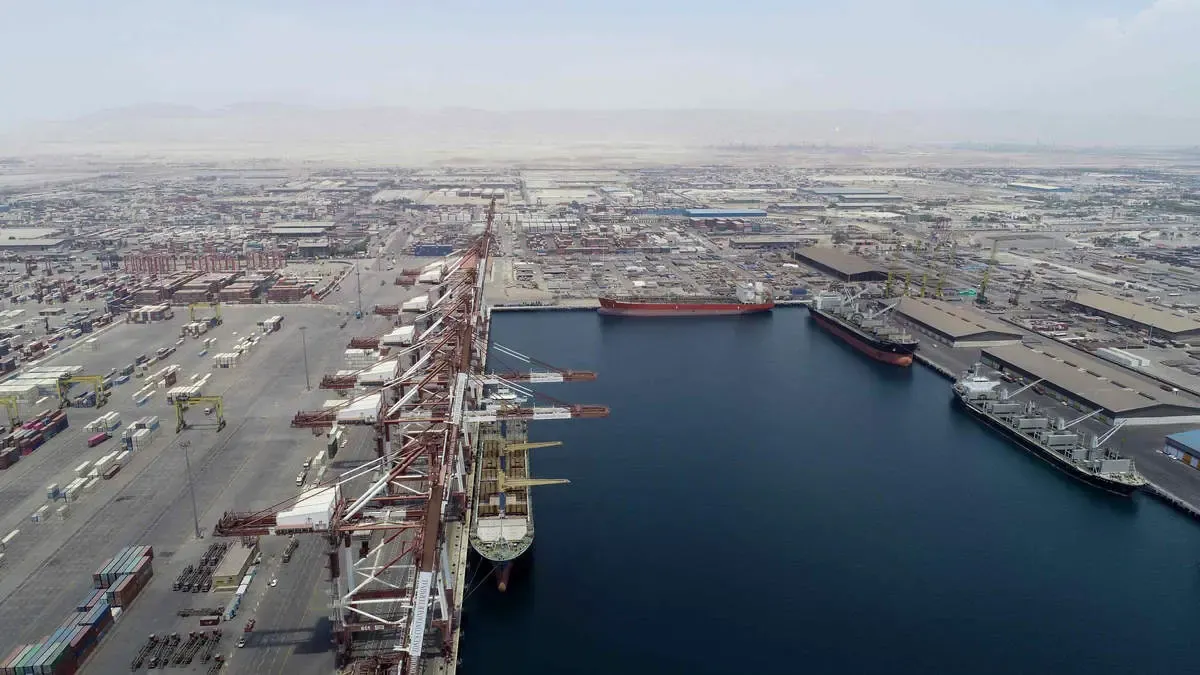
Iran’s maritime logistics sector has quietly established itself as one of the most resilient and profitable segments of the country’s capital market, benefiting from structural exposure to foreign trade, dollar-linked revenues and steady operational improvements.
While rarely in the spotlight, the industry’s long-term performance suggests a business model capable of generating sustained returns even amid macroeconomic volatility.
Over the past decade, maritime logistics has consistently ranked among Iran’s growth-oriented sectors. Average annual revenue growth of around 45% over the last 13 years highlights the sector’s close linkage to international trade flows and global shipping trends.
Unlike many domestically oriented industries, maritime logistics derives much of its income from external demand, making it both sensitive to global cycles and partially insulated from local demand constraints.
The revenue trajectory reached a turning point in the Iranian calendar year 1402 (March 2023–March 2024), when the industry recorded its highest-ever income. This surge was driven by a combination of higher global freight rates, increased export and import activity and inflation-driven currency effects that amplified rial-denominated revenues.
Rather than being a one-off spike, this expansion carried into 1403 (2024/25), when revenues continued to rise at a pace exceeding long-term averages, albeit with a more moderate growth profile.
Underlying Strength
Monthly and seasonal data reinforce the picture of underlying strength. Despite fluctuations in trade volumes and periodic operational constraints, revenue growth remained positive across most reporting periods, indicating that demand for core maritime services has remained intact.
A particularly strong performance was observed in late autumn (November–December 2024), when year-on-year revenue growth accelerated sharply, pointing to improved fleet utilization and intensified activity along key shipping corridors.
Profitability trends further strengthen the sector’s investment case. Average profit margins, historically around the mid-30% range, climbed to well above 50% in 1403 (2024/25). This improvement reflects more disciplined cost management, better asset productivity and a shift toward higher-value services.
Even on a seasonal basis, margins have remained elevated, suggesting that profitability gains are not merely cyclical but increasingly structural.
That said, the sector’s outlook is not without risks. Global shipping rates remain inherently volatile and are vulnerable to downturns in international demand or oversupply in global fleets.
Rising operating costs—including fuel, maintenance and labor—could also squeeze margins, particularly in competitive routes where pricing power is limited. In addition, geopolitical uncertainty and potential regulatory shifts continue to cloud long-term planning for maritime operators.
Sustaining profitability will therefore depend on continuous investment in fleet modernization, efficiency gains and prudent risk management.
Firms with stronger balance sheets and flexible operating models are better positioned to navigate these challenges. Overall, maritime logistics remains one of the few sectors in Iran’s economy where global integration, operational discipline and currency-linked revenues converge to support durable long-term returns.