Hamid Mollazadeh
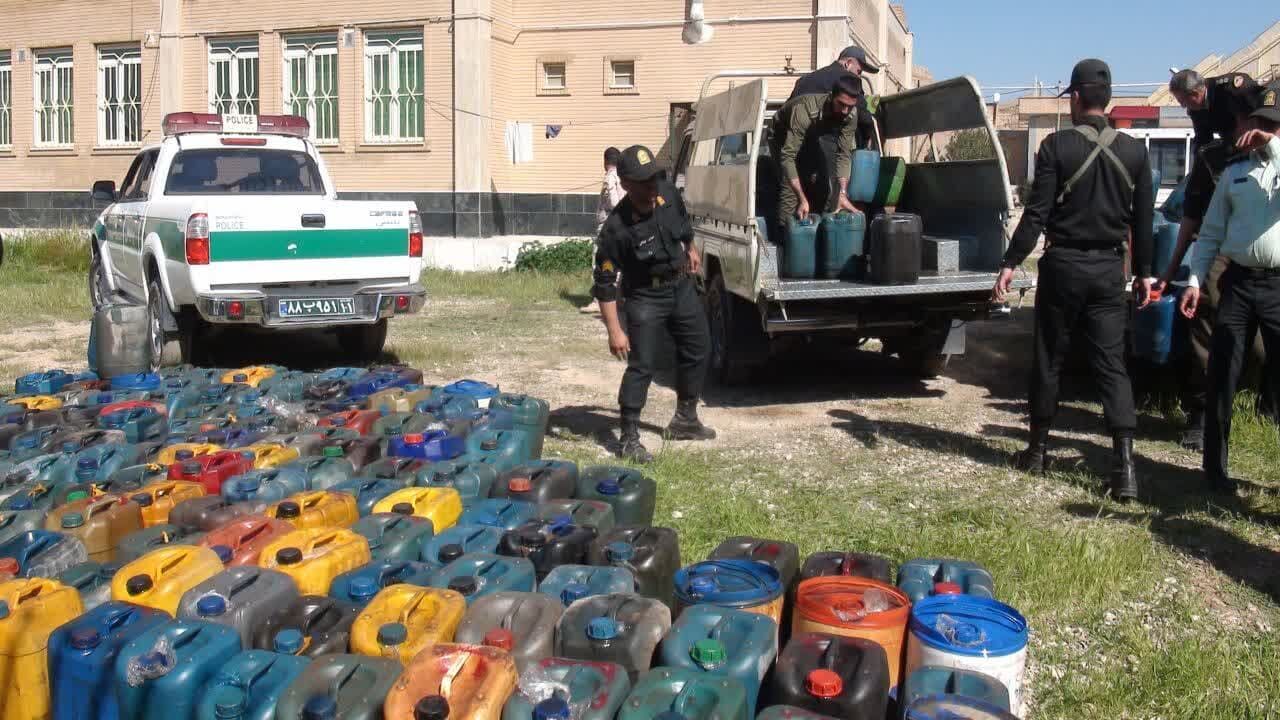
For years, Iran’s fuel smuggling problem has been hiding in plain sight, driven by one of the starkest price gaps in the global energy market. While each liter of gasoline inside Iran is sold for roughly 4 cents, the same fuel fetches close to 100 cents per liter across the border; diesel tells an even sharper story, priced at about 1 cent per liter domestically versus well over $1 in neighboring countries including Afghanistan.
This distortion has turned subsidized fuel into a high-value export for illegal networks, quietly draining public resources, distorting consumption patterns and elevating fuel diversion from a marginal crime into a structural threat to Iran’s economy and energy security.
According to Iran’s National Iranian Oil Refining and Distribution Company (NIORDC), the cost of this phenomenon is staggering.
Every liter of fuel smuggled out of the formal distribution system represents a loss financed by hidden energy subsidies—public money that ultimately benefits illegal networks rather than Iranian consumers.
Beyond fiscal damage, fuel smuggling has become a strategic concern, directly affecting energy security by disrupting supply chains, straining infrastructure and creating localized shortages, particularly during peak consumption seasons.
The consequences extend well beyond balance sheets. When fuel is siphoned off illegally, it can undermine the reliable supply of diesel to power plants, industrial facilities and the transportation sector. In a country where energy demand spikes sharply in winter and summer, even small disruptions can ripple through the economy.
Recognizing these risks, the government has elevated the fight against fuel smuggling to a central pillar of its energy policy, shifting away from reactive enforcement toward a proactive, data-driven strategy.
Real-Time Monitoring
Over the past year, Iran has rolled out an ambitious system of real-time monitoring across the entire fuel supply chain—from refineries to pipelines, storage depots, tankers and ultimately retail stations and end users.
The goal is straightforward but transformative: ensure that every drop of fuel can be traced from production to consumption. This approach reflects a broader change in governance philosophy, emphasizing transparency, digital oversight and inter-agency coordination rather than fragmented controls.
A cornerstone of this effort is a comprehensive real-time monitoring project launched by NIORDC, designed specifically to combat fuel smuggling while also improving operational efficiency.
The initiative integrates advanced metering systems, smart logistics management and modern data infrastructure to enhance oversight of refining, transportation, storage, and distribution. A formal memorandum of understanding for the project was signed in mid-February last year, signaling high-level political backing.
Speaking at the signing ceremony, NIORDC Managing Director Mohammad-Sadegh Azimifar stressed that passive monitoring was no longer sufficient.
He described smart surveillance and digitalization of the fuel supply chain as essential tools to minimize smuggling and protect national resources. “Our objective is to use every available capacity to reduce fuel diversion,” he said, pointing to intelligent monitoring as a decisive lever.
Visible Elements
One of the most visible elements of the crackdown is the installation of electronic seals and tracking equipment on fuel tankers.
Iran’s fuel supply chain is complex, spanning refineries, thousands of kilometers of pipelines and storage facilities overseen by distribution companies.
To close loopholes, each segment must be equipped with accurate metering and control systems capable of recording real-time data on volumes produced, transferred, stored and consumed.
Infrastructure upgrades are extensive. According to the National Iranian Oil Engineering and Construction Company, thousands of kilometers of new fiber-optic lines are required along pipelines to detect leaks promptly and transmit data to monitoring centers.
At the retail end, roughly 4,500 fuel stations nationwide are being integrated into the monitoring network, ensuring comprehensive oversight from wellhead to pump.
Data emerging from these systems has already revealed the scale of the problem. By cross-referencing information from roadside cameras, the smart fuel card system, and transport documentation databases, authorities have identified significant discrepancies in diesel consumption patterns.
Analysis suggests that around 50 percent of fuel smuggling occurs within the transportation sector alone. Over the past year, more than 400 million liters of diverted fuel and some 50,000 offending vehicles have been identified through enhanced data analysis.
Financial Implications
The financial implications are enormous. Iran distributes an estimated $55 billion worth of fuel annually. Officials argue that better organization and full implementation of monitoring systems could generate at least $5 billion in additional economic value—either through reduced losses or more efficient allocation of subsidized fuel.
Evidence of early success is already evident in consumption trends. Continued enforcement and smarter oversight have contributed to a noticeable decline in diesel use outside the power-generation sector.
Average daily diesel consumption in the Iranian year 1404 (March 2025-March 2026) fell by around five million liters compared with the previous year, defying historical patterns that typically show annual growth of about five percent. As a result, diesel inventories—including strategic reserves for power plants—are now in a stronger position than a year ago.
Evolving Framework
A key innovation in this evolving framework is the launch of the “Kashef” system, a digital platform developed under Article 44 of Iran’s Seventh Development Plan.
Unlike earlier systems such as “Sepahtan” or “Sipad,” which relied heavily on hardware and were vulnerable to manipulation, Kashef is built on big data analytics and artificial intelligence. It aggregates transport manifests, license-plate recognition data, smart fuel card transactions and vehicle specifications to detect abnormal patterns automatically.
In just nine months, Kashef has reportedly prevented the smuggling of 360 million liters of diesel and identified nearly 69,000 violating vehicles. By shifting from reactive inspections to predictive analytics, the system represents a fundamental change in how Iran approaches fuel governance.
The broader message is clear: fuel smuggling is no longer viewed merely as a law-enforcement issue but as a structural challenge tied to pricing policy, subsidy reform, and energy management.
While technology alone cannot eliminate incentives created by price differentials, Iran’s data-driven push marks a significant step toward reclaiming control over its fuel economy—and ensuring that subsidized energy serves the public interest rather than the shadows of the informal market.