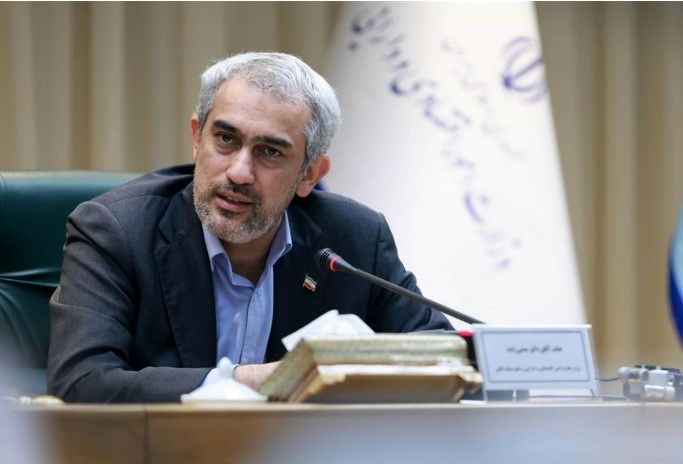
Iran’s economic team has renewed its focus on curbing inflation, with the economy minister stressing that controlling price pressures is now the government’s overriding priority and that all available policy tools will be mobilized to prevent a renewed surge in liquidity.
In a recent interview that circulated widely on social media, Economy Minister Ali Madanizadeh said inflation control is the central concern of his ministry.
He emphasized that efforts are underway to ensure that recent price shocks do not translate into higher money supply growth, a process that would further entrench inflationary pressures.
Madanizadeh pointed to the temporary inflationary impact of removing the preferential exchange rate, explaining that prices rose in the first two months of implementation, adding to monthly inflation.
However, he said this effect is expected to fade by the third month of execution, after which monthly inflation should decline noticeably.
According to the minister, preventing the spillover of short-term price pressures into sustained liquidity growth is critical, as monetization of such pressures would fuel a new round of inflation.
He also reiterated earlier warnings that financing government budget deficits through monetary channels has been a major driver of excessive liquidity growth in Iran over the years, contributing to chronic high inflation.
Economists have long argued that fiscal dominance—direct or indirect borrowing by governments from the central bank—lies at the heart of Iran’s persistent inflation problem.
Analysts note that while domestic policy coordination is essential, managing inflation also depends on broader conditions, particularly inflation expectations.
In an environment of heightened external uncertainty, experts argue, anchoring expectations becomes significantly more difficult.
Continued diplomacy and a reduction in regional and international tensions could therefore improve the environment for internal anti-inflationary policies, whereas rising political risks would constrain the scope for meaningful economic reform.
Central Bank’s Stance
Following the economy minister’s remarks, Central Bank Governor Abdolnasser Hemmati reiterated that inflation control remains the top priority of monetary and exchange-rate policy.
He has said that without sustained and meaningful disinflation, goals such as higher employment, stable growth and economic confidence would remain out of reach.
The central bank chief has also cited four main inflationary drivers: fiscal deficits, constraints on external transactions, balance-sheet weaknesses in some banks and elevated inflation expectations.
According to him, coordinated action across government branches is essential to navigate Iran’s current economic challenges and achieve durable price stability.