Iran’s National Oil Company (NIOC) has launched a significant overhaul of its upstream investment strategy, committing more than $12 billion to new oil and gas projects while reshaping its financing model to draw in private and petrochemical sector capital.
Amir Moqiseh, NIOC’s Director of Investment and Business Development, said the company has moved beyond its traditional contractor-based structure toward a partnership-oriented investment framework, Shana reported.
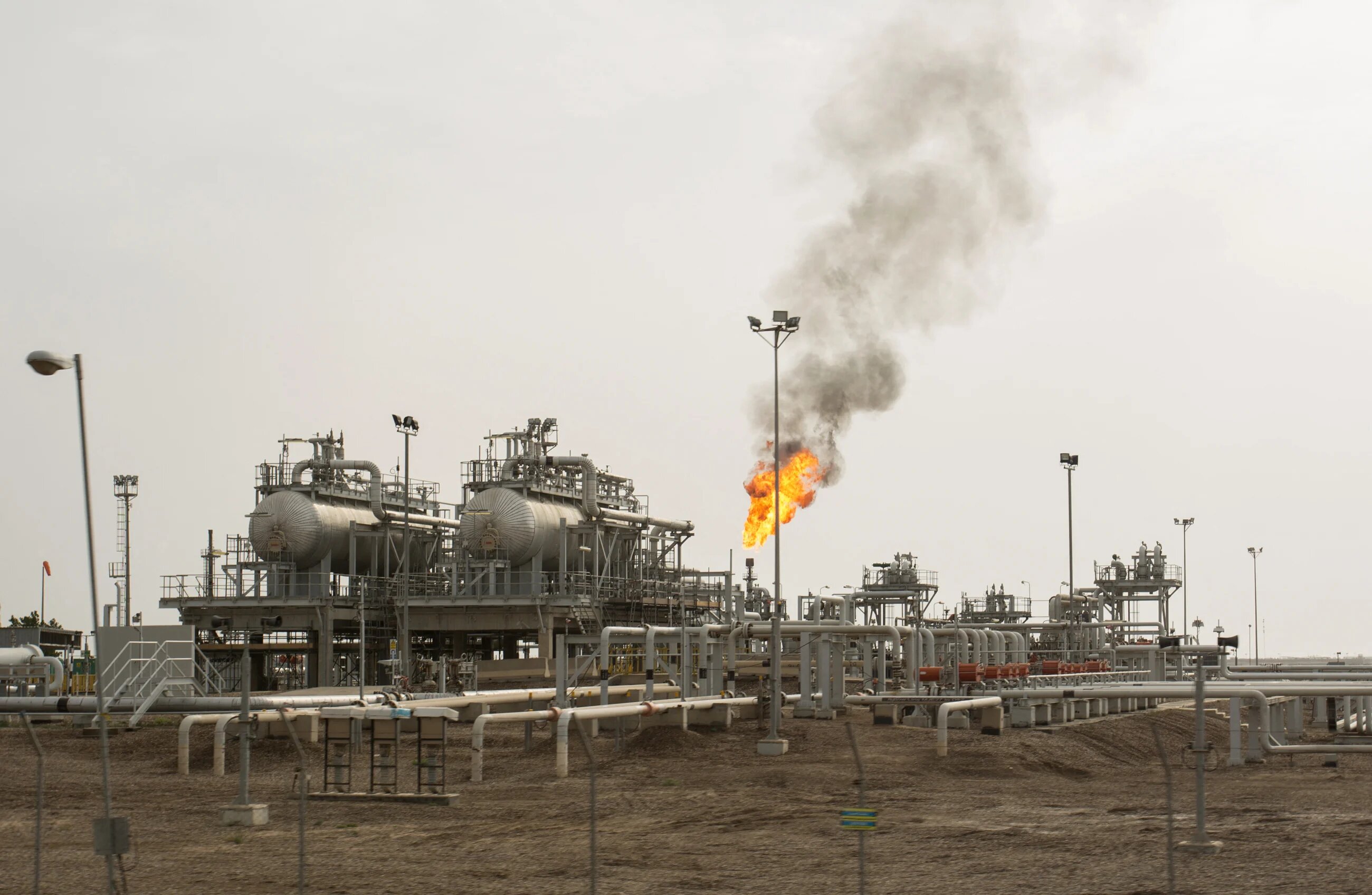
The shift, initiated last year, is designed to maximize domestic capabilities, accelerate production growth and reduce gas flaring—one of the industry’s most persistent inefficiencies.
At the heart of the new approach are three strategic priorities defined by the oil ministry: expanding oil and gas production capacity, accelerating development of shared fields, and reforming financing mechanisms to align investor interests with national energy goals.
$12 Billion in Ratified Upstream Contracts
Since the start of the current Iranian year (March 2025), five upstream contracts have been ratified and entered into execution, with a combined value exceeding $12 billion.
Two IPC (Iran Petroleum Contract) agreements for gas field development have already been signed, and three additional upstream contracts are expected before year-end.
“These projects will create substantial employment in the upstream sector while strengthening production capacity,” Moqiseh said, emphasizing the oil industry’s role as a primary driver of Iran’s economy.
A key focus is the development of shared oil and gas reservoirs, particularly the Azadegan field. With its development contract ratified and backed by a consortium of banks and exploration and production companies, output from Azadegan is projected to surpass 550,000 barrels per day in the near future.
Accelerating recovery from joint fields remains strategically vital for Iran, given regional competition over shared reserves.
From Contractor Model to Investment Partnership
Perhaps the most consequential element of NIOC’s strategy is its shift from the traditional employer–contractor structure to an investor–investee model.
Under the new framework, project counterparts are treated as investment partners rather than service providers, aligning financial incentives and risk-sharing mechanisms.
By synchronizing interests, NIOC expects to reduce project costs, speed up execution and maximize long-term economic returns.
The model is already visible in South Pars, Iran’s largest gas field, where pressure-boosting contracts have been signed with Iranian contractors. In-field drilling operations are ongoing, and development of Phase 11—led by Petropars—is advancing at an accelerated pace.
Addressing infrastructure bottlenecks has also become a priority. Offshore drilling capacity, long seen as a constraint, is being reinforced through the procurement of four offshore drilling rigs, some of which have already arrived in the country.
Petrochemical Capital Moves Upstream
A defining feature of the new investment landscape is the growing role of petrochemical companies in upstream oil and gas projects.
Enabled by provisions in Iran’s Seventh Development Plan, petrochemical firms are increasingly investing in upstream developments to secure long-term feedstock supply.
According to Moqiseh, a substantial share of this year’s signed or pending contracts involves petrochemical companies reinvesting profits from downstream operations into upstream fields.
The arrangement offers mutual benefits: petrochemical firms safeguard feedstock stability and shareholder value, while NIOC gains access to alternative financing sources amid fiscal constraints.
Targeting Gas Flaring
Gas flaring reduction has emerged as both an environmental and economic priority within the new framework. Iran currently flares or vents roughly 50 million cubic meters of gas per day, representing both lost revenue and increased emissions.
This year, implemented projects have already enabled the collection of approximately 145 million cubic feet per day (mmcf/d) of associated gas.
The Dehloran gas gathering project alone captures 82 mmcf/d, feeding the NGL 3100 facility. When NGL 3100 was inaugurated last August, it operated at a fraction of its 240 mmcf/d capacity, receiving just 80 mmcf/d of feed gas. That figure has since risen to 130 mmcf/d, reflecting gradual integration of new gas collection projects.
In early December, NIOC signed 12 contracts with an average execution period of 15 months, targeting the collection of 300 mmcf/d of gas and generating an estimated $600 million in annual revenue.
Six additional contracts are expected before year-end, adding another $65 million annually. Overall, agreements signed or planned in the second half of the year will enable the collection of roughly 370 mmcf/d of gas.
Under recently concluded and forthcoming contracts, 44 gas flares across the country are expected to be extinguished, reducing pollution while improving economic efficiency.
Broadening Private Participation
Beyond large-scale upstream agreements, NIOC is expanding participation through public–private partnership (PPP) models. Six PPP contracts signed recently are projected to add around 490,000 barrels per day to crude oil processing capacity.
In parallel, agreements with private entities will add 20 land-based drilling rigs to the national fleet, alongside efforts to secure offshore units. Additional contracts scheduled before year-end aim to create 150,000 barrels per day of new crude processing capacity.
Taken together, the strategy signals a coordinated attempt to reinforce Iran’s upstream sector, diversify funding channels and address structural inefficiencies such as gas flaring.
While external financial pressures remain a challenge, NIOC’s latest investment drive marks a clear effort to recalibrate the architecture of Iran’s oil development model.