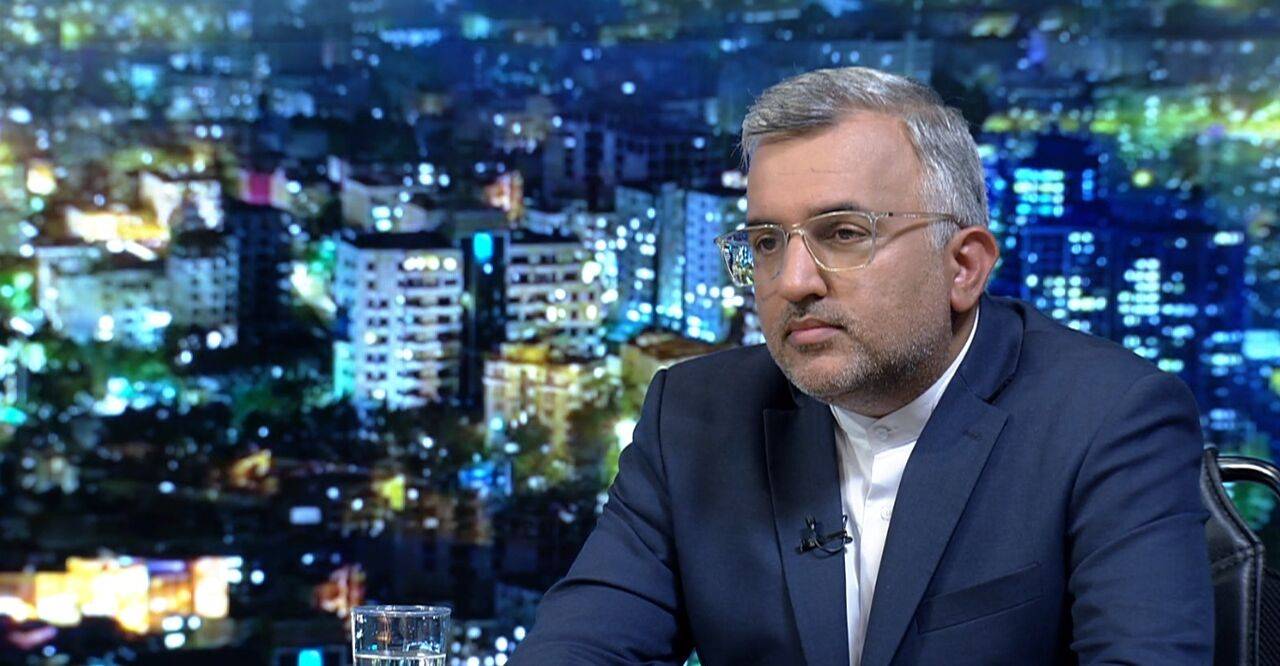
Iran’s deputy foreign minister for economic diplomacy said Tehran is seeking a nuclear agreement with the United States that delivers economic benefits for both sides, as the two countries prepare for a second round of negotiations.
Hamid Qanbari made the remarks in a meeting at the Iran Chamber of Commerce, saying that shared interests in oil and gas fields, mining investment and even aircraft purchases have been incorporated into the negotiating framework.
He added that in the previous 2015 agreement, the Joint Comprehensive Plan of Action (JCPOA), Washington did not gain economic benefits, stressing that for any future deal to be sustainable, the US must also be able to benefit from sectors with high and fast returns.
Qanbari pointed to areas such as energy, oil and gas fields, fast-yield mining investments, urban development and aircraft purchases as potential avenues through which the US could profit.
In return, he said Iran is seeking the “real and usable” release of its frozen financial assets, rather than measures that are merely symbolic or temporary.
Iran-US talks had been suspended since the 12-day war in June, during which Washington deployed carrier strike groups and extensive military equipment to the region, bringing the two countries close to another confrontation in recent months. A new round of negotiations resumed last week and is scheduled to continue in Geneva on Tuesday.
The key dispute that had driven the talks into a deadlock has been the US demand for zero uranium enrichment. However, Majid Takht-Ravanchi, Iran’s deputy foreign minister for political affairs, said in a recent interview with BBC that the issue of zero enrichment is no longer under discussion and, as far as Iran is concerned, is not on the negotiating table.
The timing of these remarks may signal a degree of flexibility from both sides in an effort to move beyond the current impasse.