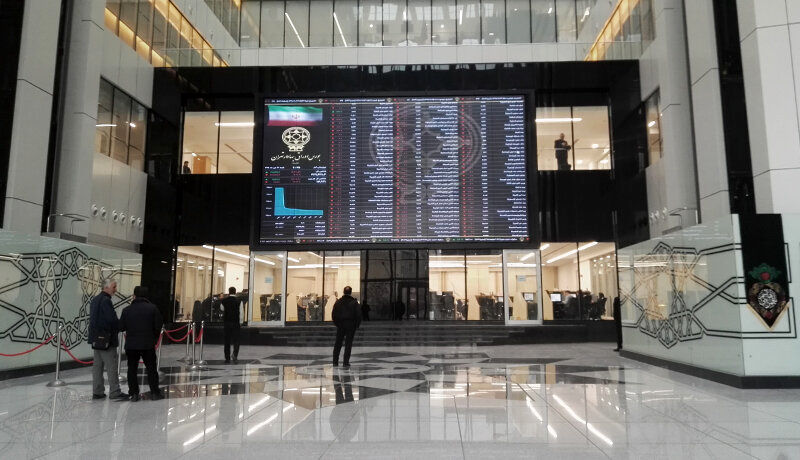
Iran’s equity market extended its decline on Saturday, with indicators pointing to more than a routine downturn. The main index of the Tehran Stock Exchange dropped 2.7% to 3.703 million, breaching the key 3.8 million support level, while the equal-weight index fell 2.26% to 958,000. More than 93% of listed shares closed in negative territory, signaling broad-based selling pressure across sectors.
Market data show 1.464 trillion tomans (about $8.93 million) exited equities in a single session. Trading activity also weakened sharply, with the value of trades falling 41% from Wednesday to 4.274 trillion tomans (about $26.06 million). The simultaneous drop in prices and liquidity suggests a deterioration in confidence that goes beyond short-term technical factors.
Analysts highlight an unusual feature of the latest slide: capital outflows were recorded not only from equities but also from fixed-income funds, typically a refuge during periods of stress.
When investors pull money from low-risk, rial-denominated instruments, it signals deeper concerns about macroeconomic stability and the safety of local-currency assets. Rather than rotating within the market, capital appears to be shifting toward alternative or external asset classes—an indicator of rising systemic risk.
Three forces are shaping the current pressure. First, intensifying political uncertainty and ambiguity surrounding diplomatic developments have raised investors’ discount rates. Second, the breach of technical support levels triggered stop-loss orders and algorithmic selling. Third, concerns over macroeconomic stability have undermined the appeal of fixed-income vehicles, amplifying capital flight from the broader market.
Sectoral dynamics reinforced the downturn. Large-cap, index-heavy groups—including petrochemicals, basic metals, mining and banking—absorbed the heaviest selling due to their liquidity and role as primary exit channels in periods of anxiety. Smaller stocks were also swept up in the selloff, indicating that the market is pricing uncertainty itself rather than firm-specific fundamentals.
Risk Perception Dominates
Despite the severity of recent declines, analysts caution against equating fear with structural deterioration. Profitability across several major industries remains intact, and valuation metrics have approached historical lows even as companies prepare for dividend distributions in the upcoming assembly season. In the near term, however, risk perception is dominating earnings prospects.
The outlook hinges on political signaling and liquidity behavior. Sustained outflows from fixed-income funds would increase the likelihood of a deeper correction. Conversely, a reduction in geopolitical tensions—particularly in the context of relations between Iran and the United States—or credible liquidity support from major shareholders and banks could help stabilize sentiment.
For now, the market’s trajectory reflects a confidence shock. A durable recovery will likely require a restoration of trust before it delivers a meaningful rebound in valuations.